Iman, Islam, Kufr, Shirk
- Qur'an Explorer

- Feb 5
- 9 min read

The Architecture of Consciousness: A Quranic Investigation
PART 1: THE FOUNDATION - Understanding Core States
Chapter 1: Iman - Finding Security in Reality
What tradition says: Religious faith, doctrinal belief, accepting prescribed articles of faith
What the Quran reveals through its own usage:
The Root Pattern (A-M-N):
Amina (أَمِنَ) = to be secure, safe, at peace
Amān (أَمَان) = security, safety
Amīn (أَمِين) = trustworthy, one who safeguards
Āmana (آمَنَ) = found security, came to trust
Īmān (إِيمَان) = the state of security/trust
Mu'min (مُؤْمِن) = one in the state of iman
Evidence from Quranic usage:
48:27 - "āminīn (secure/safe), heads shaved, not fearing"
3:97 - "whoever enters it is āminan (secure/safe)"
106:4 - "made them secure (āmana-hum) from fear"
12:17 - "you will not be mu'min (trust) us even if we are truthful"
The actual meaning: Iman is finding security in reality/truth - trusting what is evident, being at peace with what is, living without the anxiety that comes from denying truth.
Not: Intellectual assent to propositions But: An internal state of security and trust regarding reality
Chapter 2: Muslim - Peaceful Alignment with Reality
What tradition says: Member of the religion of Islam, adherent to Islamic law
What the Quran reveals through its own usage:
The Root Pattern (S-L-M):
Salām (سَلَام) = peace, safety, soundness
Aslama (أَسْلَمَ) = made peace with, aligned harmoniously
Muslim (مُسْلِم) = one who has made peace/aligned
Silm (سِلْم) = peace, harmony
Salima (سَلِمَ) = to be safe, sound, whole
Evidence from Quranic usage:
2:112 - "whoever aslama his face to Allah while doing good"
3:20 - "aslamtu my face to Allah"
31:22 - "whoever yuslim his face to Allah"
2:208 - "enter into al-silm (peace/harmony) completely"
The actual meaning: Muslim means being in peaceful alignment with reality - making peace with the Source, orienting yourself harmoniously toward truth, living in soundness with what is.
Not: Religious membership or identity But: A state of peaceful alignment with reality
Chapter 3: The Critical Distinction (49:14-15)
The Quran explicitly contrasts Iman and Muslim:
49:14: "The bedouins say 'āmannā.' Say: You have not found iman; rather say 'aslamna,' for iman has not yet entered your hearts..."
49:15: "The mu'minūn are only those who found iman in Allah and His Messenger, then did not doubt, and strove with their wealth and themselves... Those are the truthful ones."
The distinction:
Muslim (External) | Mu'min (Internal + External) |
Outward alignment | Inner state entered the heart |
Peaceful orientation | Security/trust established |
Can exist without full iman | Includes being muslim |
Valid starting point | Further development |
External practice | Internal reality manifesting |
The progression: Islam → Iman → Steadfastness → Active Striving → Being Among the Truthful
Chapter 4: Everything Is Already Muslim
3:83: "While to Him have aslama (aligned peacefully) those in the heavens and earth, willingly or unwillingly"
The profound insight: Everything in existence is already muslim to Allah - following natural law, in harmony with reality.
Two ways:
Unwillingly/unconsciously - your body, the planets, natural law (you can't escape this)
Willingly/consciously - recognizing and aligning with what already is
30:30: "The fitrah (natural disposition) of Allah upon which He originated humanity. No change in the creation of Allah."
The implication: Being muslim (aligned with reality) is built into the fitrah. The question is: will you recognize this consciously (muslim willingly, with iman) or remain unconscious of it (muslim unwillingly, with kufr)?
PART 2: THE OPPOSITES - Understanding What Blocks Consciousness
Chapter 5: Kufr - Covering Over Reality
What tradition says: Disbelief, rejection of Islam, heresy
What the Quran reveals through its own usage:
The Root Pattern (K-F-R): The root means to cover, conceal, bury
Evidence:
57:20 - "kuffār (farmers)" - those who cover/bury seeds
36:37 - Night covers the day (imagery of covering)
6:1 - "those who kafaru with their Lord make equals"
The actual meaning: Kufr is actively covering over what is evident - denying reality, refusing to acknowledge what's clear, living in willful ignorance of truth.
Examples of kufr in the Quran:
16:71 - Covering over/denying the favors given
31:32 - Recognizing reality in danger, covering it over when safe
40:83 - Covering clear proofs with their own "knowledge"
2:6-7 - Covering so persistently that perception becomes sealed
The opposite pairing:
Shukr (recognition/gratitude) vs. Kufr (covering/denial)
Iman (trust in what's evident) vs. Kufr (covering what's evident)
Not: Intellectual doubt or questioning But: Active denial and covering over of what is clear
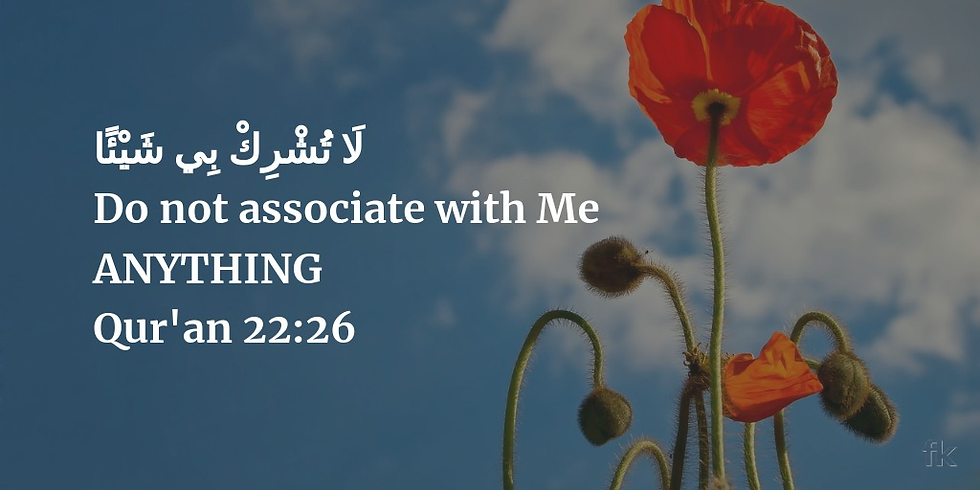
Chapter 6: Shirk - Splitting the Unity
What tradition says: Polytheism, idol worship, associating partners with God
What the Quran reveals through its own usage:
The Root Pattern (SH-R-K): The root means to share, partner, associate, divide
Evidence:
4:12 - "they share (shurakā') in a third" (inheritance division)
42:21 - "partners (shurakā') who have ordained for them a deen"
6:136 - Dividing shares between Allah and supposed partners
6:22-23 - "Where are your partners (shurakā'u-kum)?"
The actual meaning: Shirk is splitting/dividing what should be unified - making partners with Allah in authority, trust, devotion, or judgment.
31:13: "Indeed shirk is a great injustice (dhulm)"
Why injustice? Because it puts things where they don't belong - attributes authority, creative power, or partnership to what has none.
Types of shirk revealed in the Quran:
Shirk in Authority (42:21) - giving humans the right to legislate deen alongside Allah
Shirk in Worship/Service (6:163, 39:64-65) - directing devotion to partners
Shirk in Reliance/Trust (9:116, 29:41) - treating creation as partners in provision
Shirk in Knowledge/Judgment (6:148, 10:59) - giving human opinion partnership with divine knowledge
The fundamental problem: 30:31-32: "Do not be of those who associate partners - of those who have divided their deen and become sects, every faction rejoicing in what it has."
Shirk creates division - competing authorities create competing systems create religions create division.
Not: Just idol worship But: Any splitting of the unified Source - in authority, trust, devotion, or judgment
Chapter 7: Why Shirk Cannot Be Forgiven
4:48, 4:116: "Indeed, Allah does not forgive that partners be associated with Him, but He forgives what is less than that for whom He wills."
Why is shirk uniquely unforgivable?
All other wrongs exist within the system and can be rectified:
Theft → return what's stolen
Lies → restore truth
Harm → heal and repair
But shirk is denying the foundation itself - refusing to recognize Unity.
If you die in shirk:
You die refusing to recognize there's One Source
You've split reality in your consciousness
You've divided what is unified
There's nothing to forgive because you haven't acknowledged the One who forgives
It's not arbitrary punishment - it's the logical consequence of rejecting the entire framework.
Chapter 8: The Relationship Between Kufr and Shirk
How they work together:
6:1: "Those who kafaru (cover) with their Lord make equals [associate partners]"
The progression:
Evidence is clear: One Source, unified reality
Kufr: Cover over this evidence
Shirk: Fill the vacuum with partners/intermediaries
Division: Multiple authorities create competing systems
Religion: Systems crystallize into religions that divide
Example - Traditional Islamic Development:
Quran is clear: self-sufficient, complete (6:114-115)
Kufr: "Quran alone isn't enough"
Shirk: Make hadith, fiqh partners with Quran
Division: Sunni, Shia, schools, sects
Religion: System that divides Muslims from others and from each other
The Quran warned against exactly this.
PART 3: THE SUPPORTING FRAMEWORK - Concepts That Sustain Consciousness
Chapter 9: The Ecosystem of Iman
When you have iman (security in reality), related states and practices naturally emerge:
1. Taqwa (تقوى) - Protective Consciousness
Root W-Q-Y: to protect, shield, guard
Evidence:
76:11 - "Allah will protect them (waqāhum)"
16:81 - "garments to protect you (taqīkum) from heat"
Meaning: Not "fear of God" but protective awareness - conscious vigilance regarding reality that shields from harmful consequences
Relationship to iman:
Iman = trust in reality
Taqwa = conscious awareness of reality that protects you
2:183: "Prescribed for you is siyam... so that you may have taqwa"
2. Dhikr (ذكر) - Active Remembrance
Root DH-K-R: to remember, recall, be mindful
Evidence:
13:28 - "hearts find rest in the dhikr of Allah"
15:9 - The Quran itself is "dhikr" (reminder)
20:14 - "Establish salat for My dhikr"
Meaning: Active remembrance and mindfulness of reality
Relationship to iman: You maintain iman through dhikr - keeping consciousness of reality present
Not: Ritual recitation But: Active mindfulness
3. Sabr (صبر) - Steadfast Endurance
Root S-B-R: steadfastness, constancy, endurance
Evidence:
2:153 - "Seek help through sabr and salat"
2:250 - "Pour upon us sabr" (in battle - not passive patience)
70:5 - "Practice sabr with gracious sabr"
Meaning: Graceful constancy, steadfast endurance
Relationship to iman: When you trust reality (iman), you can remain steadfast (sabr) through challenges
Not: Passive waiting But: Active steadfastness rooted in trust
4. Shukr (شكر) - Recognition/Gratitude
Root SH-K-R: recognition, acknowledgment, appreciation
Evidence:
14:7 - "If you practice shukr... if you practice kufr..." (opposites)
76:3 - "Either shākiran (recognizing) or kafūran (covering)"
27:40 - "Practice shukr or practice kufr"
Meaning: Recognizing and appreciating reality and what you've been given
Relationship to iman:
Kufr = covering over truth and blessings
Shukr = recognizing truth and blessings
Iman enables shukr
Not: Ritualized thanksgiving But: Genuine recognition
5. 'Amal Ṣāliḥ (عمل صالح) - Constructive Action
Root S-L-H: setting right, improving, constructive
Evidence:
49:9 - "Make islāh (reconciliation/setting right) between brothers"
11:117 - "While their people were muṣliḥūn (those who set things right)"
7:170 - "Those who do islāh (improvement)"
Meaning: Constructive works, beneficial action, sound deeds that improve conditions
The constant pairing: "Those who have iman and do al-'amal al-ṣāliḥāt" (appears dozens of times)
Not: Belief + works as separate requirements But: Inner state (iman) naturally manifesting in outer action ('amal ṣāliḥ)
Chapter 10: The Flow of Consciousness
The natural progression when living consciously:
IMAN (finding security in reality)
↓
TAQWA (protective consciousness of reality)
↓
DHIKR (active remembrance/mindfulness)
↓
SHUKR (recognition/appreciation of what is)
↓
SABR (steadfast endurance through challenges)
↓
'AMAL ṢĀLIḤ (constructive, beneficial action)
Supporting concepts:
Qalb (heart) - where iman resides
Yaqīn (certainty) - deeper level of iman
Hudā (guidance) - what leads to iman
Nūr (light) - clarity vs. darkness (kufr)
None of these are separate religious obligations. They're all aspects of living consciously aligned with reality.
PART 4: THE UNITY PRINCIPLE - Tawhid as Foundation
Chapter 11: Tawhid - Recognizing Unity
Root W-H-D: one, unity, uniqueness
112:1-4 (Sūrah Al-Ikhlāṣ): "Say, 'He is Allah, One (Aḥad), Allah, the Eternal Refuge. He neither begets nor is born, nor is there to Him any equivalent.'"
The message throughout the Quran:
2:163 - "Your deity is One deity"
37:4 - "Indeed, your deity is One"
21:108 - "Your deity is but One deity; so will you be muslimīn?"
Tawhid in practice:
One Source
One Reality
One Truth
One Authority (the Quran)
No partners, no intermediaries, no division
The liberation: When you recognize Unity:
Free from divided loyalties
Free from religious authorities claiming partnership
Free from conflicting sources
Free from anxiety about which authority to follow
Simple, clear, unified
Chapter 12: The Complete Architecture
THE POSITIVE FRAMEWORK:
TAWHID (recognizing Unity)
↓
IMAN (finding security in the One Reality)
↓
MUSLIM (peaceful alignment with reality)
↓
TAQWA → DHIKR → SHUKR → SABR
↓
'AMAL ṢĀLIḤ (constructive action)
THE NEGATIVE OPPOSITES:
SHIRK (splitting Unity)
↓
KUFR (covering over Reality)
↓
Division, confusion, anxiety
↓
Religion instead of Deen
THE FUNDAMENTAL CHOICE:
Path of Consciousness | Path of Covering |
Tawhid (Unity) | Shirk (Partners) |
Iman (Security in truth) | Kufr (Covering truth) |
Muslim willingly | Muslim unwillingly |
Taqwa (Awareness) | Ghaflah (Heedlessness) |
Shukr (Recognition) | Denial |
Clarity | Confusion |
Peace (Salām) | Anxiety |
Deen (Way of life) | Religion (Division) |

CONCLUSION: The Pattern Revealed
What Emerges
When we let the Quran define its own vocabulary through its own usage patterns, a completely different picture emerges from traditional interpretation:
Traditional framework:
Iman = religious faith/belief
Muslim = religious identity
Kufr = disbelief/heresy
Shirk = idol worship
Creates: religious obligations, ritual requirements, identity markers, division
Quranic framework:
Iman = finding security in reality
Muslim = peaceful alignment with reality
Kufr = covering over what's evident
Shirk = splitting the unified Source
Creates: conscious living, awareness, unity, direct engagement with truth
The Vocabulary of Consciousness
The Quran is not presenting a religion.
It's describing what conscious living looks like:
Trusting reality (iman)
Aligning with it (muslim)
Staying aware (taqwa)
Remaining mindful (dhikr)
Recognizing what is (shukr)
Enduring steadfastly (ṣabr)
Acting constructively ('amal ṣāliḥ)
All rooted in recognizing Unity (tawhīd), the opposite of:
Covering truth (kufr)
Splitting the Source (shirk)
Creating divisions (religions)
The Universal Invitation
This is not exclusive to a religious group.
The Quran invites all humans to:
Recognize what's already true (fitrah)
Stop covering it over (avoid kufr)
Stop splitting Unity (avoid shirk)
Find security in reality (iman)
Align peacefully with it (be muslim willingly)
Live consciously (taqwa, dhikr, shukr, ṣabr)
No religious conversion required. No joining a community. No adopting an identity.
Just: wake up to what already is.
For the Reader
You're not being asked to:
Believe doctrines
Join a religion
Perform rituals
Separate from others
You're being invited to:
Stop covering over what's evident
Recognize Unity
Find security in reality
Align your life with truth
Live consciously and constructively
That's deen (a way of life based on surrender to reality). Not religion (a system that divides people).
This is what the Quran reveals about itself when read on its own terms, free from centuries of accumulated interpretation that covered over (kufr) its simple, unified message and created partners (shirk) with its self-sufficient guidance.
The text itself has always been clear.
We just needed to let it speak.
Comments